
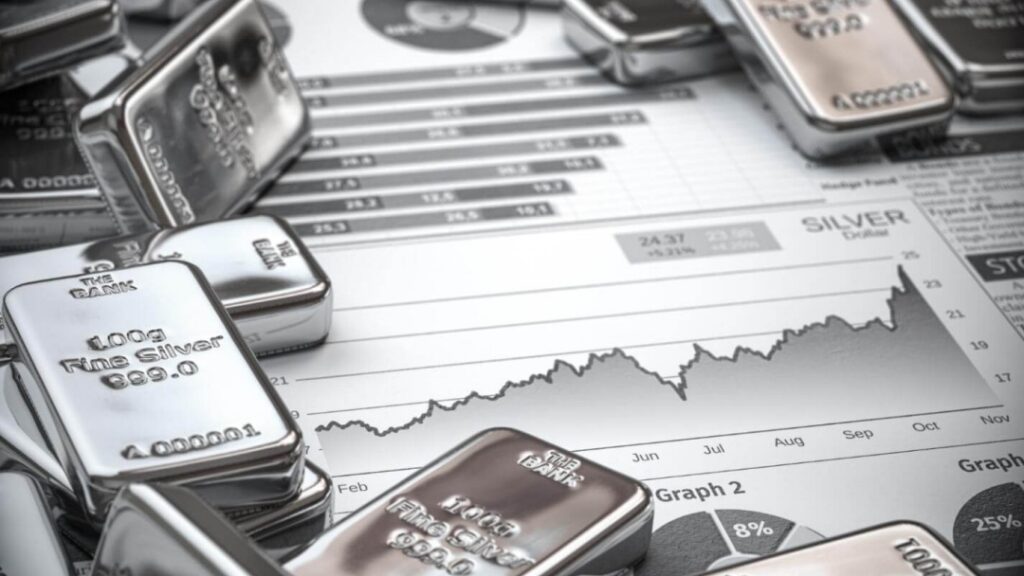
In a year dominated by headlines about artificial intelligence stocks and mega-cap tech valuations, one of the most consequential market moves of 2025 unfolded almost unnoticed. While investors were distracted by equity hype cycles, XAGUSD quietly rewrote the rules of the commodities market by pushing decisively above the $75 per ounce threshold.
This move was not a speculative spike, nor was it driven by short-term sentiment. Instead, the rally in XAGUSD reflects a deeper transformation—one rooted in physical scarcity, monetary stress, and a systemic loss of confidence in fiat currencies.
As silver transitions from a “secondary precious metal” into a strategic industrial and monetary asset, the question investors should be asking is no longer whether silver has peaked—but whether the current price even begins to reflect its true value.
XAGUSD and the End of the “Cheap Silver” Era
For decades, silver was treated as gold’s volatile cousin—useful for diversification, but rarely viewed as a core macro asset. That perception is rapidly becoming obsolete.
The latest surge in XAGUSD is not the result of speculative excess. Instead, it is the outcome of a multi-year imbalance between supply and demand that is now impossible to ignore.
According to data from industry groups, the global silver market has remained in a structural deficit for five consecutive years. Unlike cyclical shortages, this deficit is driven by irreversible trends: rising industrial demand, declining ore grades, and limited new mine investment.
The key distinction? Fiat currencies can be expanded instantly. Physical silver cannot.
The Industrial Demand Shock Reshaping XAGUSD
Silver’s New Role in the AI Economy

Silver is no longer just a store of value—it is now an essential input in the technologies defining the next economic cycle. The rapid expansion of artificial intelligence infrastructure has elevated silver into a strategic resource.
High-performance semiconductors, advanced chip packaging, and ultra-efficient electrical interconnects all rely on silver’s unmatched conductivity. As global AI deployment accelerates, industrial consumption is drawing down physical inventories at an unprecedented pace.
This industrial transformation has given XAGUSD what analysts increasingly refer to as an “AI premium”—a valuation layer previously reserved for energy metals like copper and lithium.
Green Energy and the Structural Drain on Supply
Beyond AI, renewable energy continues to exert relentless pressure on silver supply. Solar photovoltaic systems require significant amounts of silver for conductive paste, and global solar installations continue to rise as governments pursue decarbonization goals.
The result is a simple equation: accelerating demand meets inflexible supply. And when that happens, price suppression becomes mathematically unsustainable.
Monetary Policy Failure and the XAGUSD Inflation Hedge
The second pillar supporting silver’s long-term trajectory lies in monetary policy—or more accurately, its limitations.
Central banks across developed economies are confronting an uncomfortable reality: sovereign debt levels have reached a scale that cannot be serviced under restrictive monetary conditions. Rate cuts are no longer optional; they are inevitable.
As policymakers attempt to manage ballooning interest expenses through monetary expansion, real yields are being pushed further into negative territory. Historically, these environments have been the most favorable for precious metals—particularly silver, which tends to outperform gold during reflationary cycles.
This is why XAGUSD has emerged as one of the most effective hedges against currency debasement in the current macro landscape.
Central Banks, Reserves, and the Silver Question
One of the most under-discussed dynamics in the silver market is the changing behavior of central banks.
Gold has traditionally served as the primary reserve hedge. However, with gold markets increasingly crowded and liquidity constraints emerging in alternative metals, silver is gaining attention as a viable reserve diversification asset.
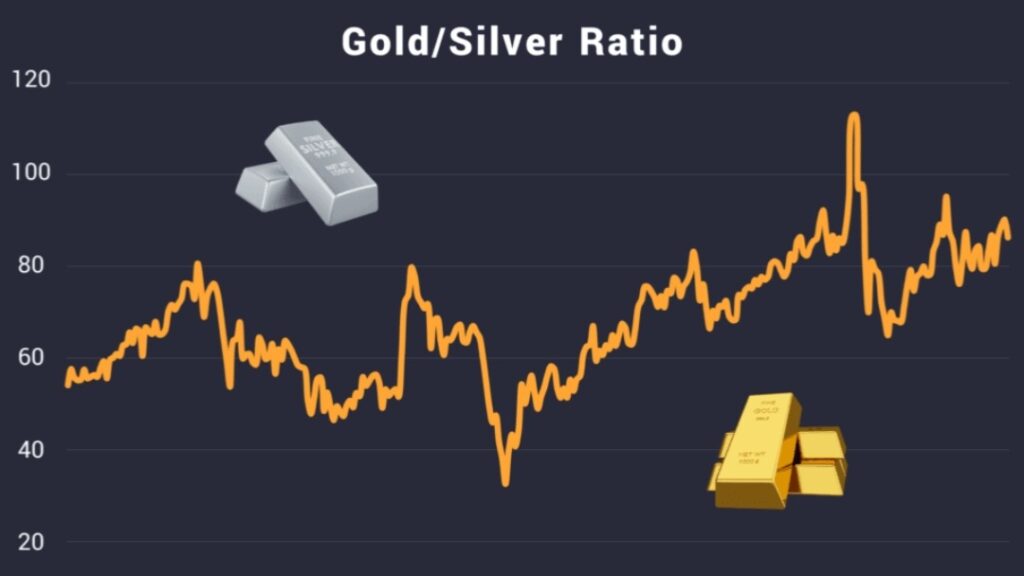
The gold-to-silver ratio remains historically elevated, signaling persistent undervaluation despite silver’s recent rally. Mean reversion alone implies substantial upside potential for XAGUSD, even without further macro deterioration.
Should institutional demand begin to overlap with already-tight industrial consumption, the resulting supply squeeze would be difficult to contain through paper markets alone.
Wall Street’s Shift in Silver Sentiment
Market narratives often change only after price action forces reconsideration. Silver is no exception.
Major financial institutions that once downplayed silver’s prospects are now openly revising their outlooks. Forecasts calling for continued outperformance relative to gold are becoming more common, particularly as analysts reassess the sustainability of fiat-based financial systems.
This shift matters because institutional participation tends to validate trends rather than initiate them. In the case of XAGUSD, it suggests that the rally is transitioning from an early-stage revaluation to a broader acceptance phase.
Technical Structure: Why XAGUSD Is Redefining Support Levels
From a technical perspective, silver’s move above $75 represents more than a breakout—it marks a structural reset.
Former resistance zones are now acting as support, indicating sustained accumulation rather than speculative blow-off behavior. Momentum indicators continue to confirm trend strength, while pullbacks remain shallow and well-defended.
In technical market terms, this is characteristic of early secular bull markets—not late-stage tops.
Trading and Accessing XAGUSD in Modern Markets
For traders and investors looking to gain exposure to silver, accessibility has improved significantly. Through platforms such as Ultima Markets, participants can engage with XAGUSD using advanced charting tools, flexible leverage, and real-time execution.
New market participants may consider starting with a demo account to explore silver price dynamics in a risk-free environment, while experienced traders can evaluate strategies through a live trading account.
For broader market insights and macro-driven trade ideas, you can also learn more through dedicated market analysis resources.
XAGUSD and the Future of Fiat Confidence
At its core, silver’s rise is not merely about industrial demand or technical breakouts—it is about trust.
Every sustained bull market in precious metals reflects a weakening belief in fiat currency stability. The current trajectory of XAGUSD suggests that this erosion of confidence is accelerating.
Unlike speculative assets, silver occupies a unique intersection of monetary history and modern utility. It cannot be digitally replicated, centrally issued, or politically manipulated. Its value is grounded in physical reality—and increasingly, that reality is scarce.
Conclusion
Silver’s advance beyond $75 per ounce is not an endpoint—it is a signal. A signal that paper valuations are adjusting to physical constraints. A signal that monetary systems are under pressure. And a signal that XAGUSD is transitioning into a core macro asset for the coming decade.
As industrial demand accelerates, central banks face limited policy options, and investors seek tangible stores of value, silver’s role in global portfolios is being fundamentally redefined.
What was once dismissed as a secondary metal is now emerging as a primary barometer of systemic stress—and opportunity.
FAQ
Q1: Is XAGUSD overvalued after breaking $75?
Current pricing reflects structural supply constraints rather than speculative excess, suggesting valuation expansion may still be incomplete.
Q2: How does silver compare to gold in inflationary environments?
Silver historically exhibits higher volatility and often outperforms gold during reflation and monetary easing cycles.
Q3: What risks should silver investors monitor?
Short-term volatility, shifts in industrial demand, and unexpected monetary tightening remain key risk factors.
Q4: Can XAGUSD be traded actively or only held long term?
Both approaches are viable, depending on strategy, time horizon, and risk management preferences.
This article represents the author’s personal views only and is for reference purposes. It does not constitute any professional advice.
