
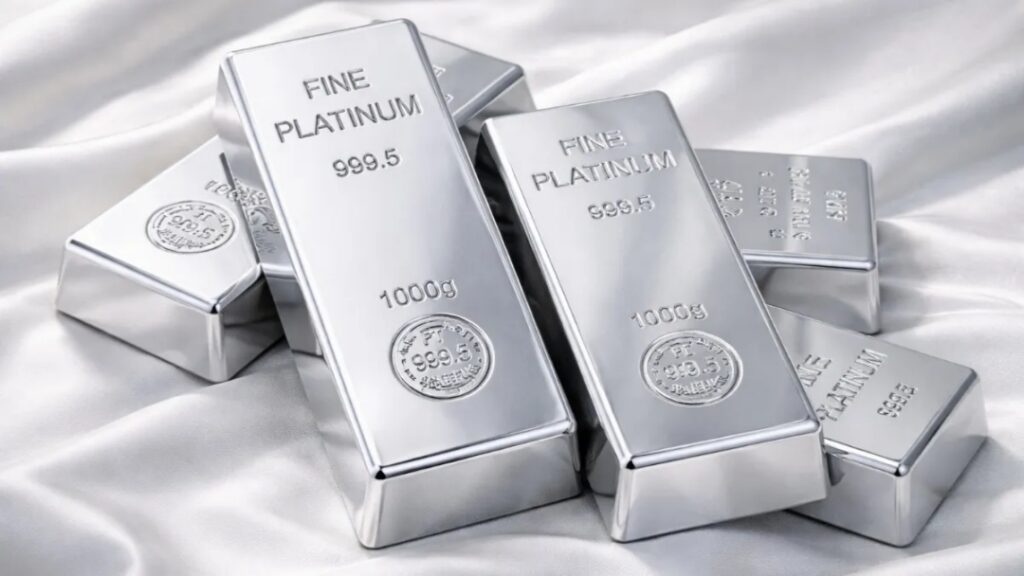
The Platinum market has entered 2026 with renewed momentum, capturing the attention of both commodity investors and global traders. After years of relatively subdued performance, Platinum has staged a remarkable comeback, emerging as one of the strongest-performing precious metals in recent cycles.
As of mid-March 2026, Platinum is trading near $2,184 per ounce, reflecting steady upward pressure following an exceptional rally throughout 2025. With gains exceeding 120% over the past year, the metal has transitioned from a lagging asset into a leading performer within the commodities space.
What makes the current setup particularly compelling is that the rally in Platinum may not yet be complete. Structural supply shortages, evolving demand dynamics, and supportive macroeconomic conditions are aligning to create a favorable environment for further upside in the near term.
In this analysis, we explore why Platinum could remain one of the most closely watched assets over the next 30 days and beyond.
Supply Constraints Continue to Support Platinum Prices
A major factor underpinning the strength of Platinum is the persistent imbalance between supply and demand. The global market is projected to remain in deficit for the fourth consecutive year, reinforcing the structural tightness that has supported recent price gains.
In 2026, the Platinum market is expected to face a shortfall of approximately 240,000 ounces. When combined with deficits recorded since 2023, cumulative shortages could reach nearly 3 million ounces, significantly reducing available above-ground inventories.
Limited Production Growth
Supply expansion for Platinum remains constrained. Total output is forecast to increase only modestly, with production rising by around 2% year-on-year.
Several factors contribute to this limited growth:
- Heavy reliance on South Africa, which accounts for the majority of global Platinum production
- Operational challenges such as energy shortages and labor disruptions
- Geopolitical uncertainties affecting key producing regions
These constraints make it difficult for supply to respond quickly to rising demand, reinforcing upward pressure on Platinum prices.
Recycling Supply Insufficient to Close the Gap
Although higher prices have encouraged recycling activity—particularly from automotive catalysts and jewelry—this additional supply is not sufficient to offset the structural deficit.
As a result, the overall availability of Platinum remains tight, creating a supportive backdrop for continued price appreciation.
Demand for Platinum Remains Resilient and Diversified
While supply constraints are important, the demand side of the equation also plays a critical role in shaping the outlook for Platinum.
Despite changes in certain industries, overall consumption remains stable and, in some segments, is expanding.
Investment Demand Strengthens
Investor interest in Platinum has increased significantly in recent months. Physical investment demand—including bars and coins—is projected to reach record levels in 2026.
This growing demand reflects several factors:
- Rising interest in alternative precious metals
- Portfolio diversification strategies
- Perception of Platinum as undervalued relative to gold
As economic uncertainty persists, investors are increasingly turning to Platinum as a complementary store of value.
Industrial and Technological Applications
Beyond investment demand, Platinum continues to play a vital role in industrial applications.
Key uses include:
- Catalytic converters for emissions control
- Electronics manufacturing
- Medical devices such as pacemakers
- Emerging hydrogen fuel cell technologies
The diversification of industrial demand helps stabilize consumption patterns and supports long-term growth prospects for Platinum.
Macroeconomic Environment Favors Platinum
The broader macroeconomic backdrop also contributes to the bullish case for Platinum.
Several global trends are currently working in favor of precious metals, including currency movements, inflation dynamics, and geopolitical developments.
Weaker U.S. Dollar and Inflation Trends
A softer U.S. dollar enhances the appeal of Platinum for international buyers, as it reduces the effective cost of the metal in non-dollar terms.
At the same time, persistent inflation pressures and expectations of potential monetary easing create favorable conditions for precious metals. Historically, Platinum tends to move in tandem with gold and silver during such periods.
Geopolitical Risks and Safe-Haven Demand
Ongoing geopolitical tensions continue to influence global commodity markets.
Key developments include:
- Instability in the Middle East affecting energy markets
- Continued disruptions linked to the Russia-Ukraine conflict
- Trade tensions between major economies
These uncertainties often drive demand for hard assets, including Platinum, as investors seek to hedge against volatility.
Short-Term Forecast: What to Expect for Platinum
Looking ahead, market projections suggest that Platinum may continue to trade within an upward trajectory in the near term.
Several forecasts indicate:
- Stabilization around current levels in the short term
- Potential movement toward $2,300+ in the coming weeks
- Longer-term targets extending toward $2,500 or higher
More optimistic scenarios suggest that continued supply deficits and strong demand could drive Platinum prices even further.
While short-term corrections are always possible, the underlying trend remains supported by strong fundamentals.
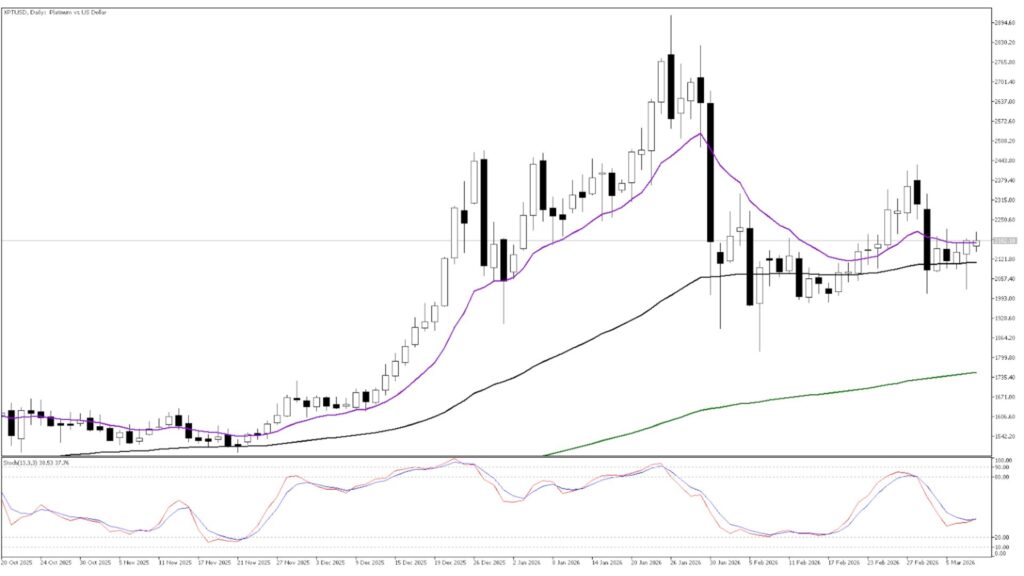
Technical Analysis: Platinum Maintains Bullish Structure
From a technical perspective, Platinum continues to exhibit a constructive price pattern.
After breaking out of a prolonged consolidation phase in 2025, the metal has maintained a series of higher highs and higher lows—an indication of sustained bullish momentum.
Key Levels to Watch
- Immediate support near recent consolidation zones
- Resistance levels aligned with previous highs
- Psychological milestones above $2,200
As long as Platinum remains above key support levels, the broader trend is likely to remain intact.
Traders seeking to better understand price action and commodity strategies can learn more about macro-driven market analysis.
Access to advanced trading tools and real-time data is also essential. Platforms like Ultima Markets provide comprehensive resources for analyzing Platinum and other commodities.
Conclusion
The outlook for Platinum in 2026 is supported by a convergence of powerful factors.
Persistent supply deficits, resilient demand across multiple sectors, and a favorable macroeconomic environment all contribute to a constructive market outlook. At the same time, technical indicators reinforce the possibility of continued upward momentum.
Although market conditions can change, the current structure suggests that Platinum remains well-positioned for further gains in the near term.
For investors and traders alike, Platinum represents a compelling opportunity within the broader commodities landscape.
FAQ
This article represents the author’s personal views only and is for reference purposes. It does not constitute any professional advice.